
Finish carpentry Dedham & Needham
The woodwork you see every day.
Finish carpentry is the visible woodwork that goes in after the walls: built-ins, cabinets, baseboard, crown, casing. It is also the part of a house that shows every crooked cut, which is why we do it slow and square.
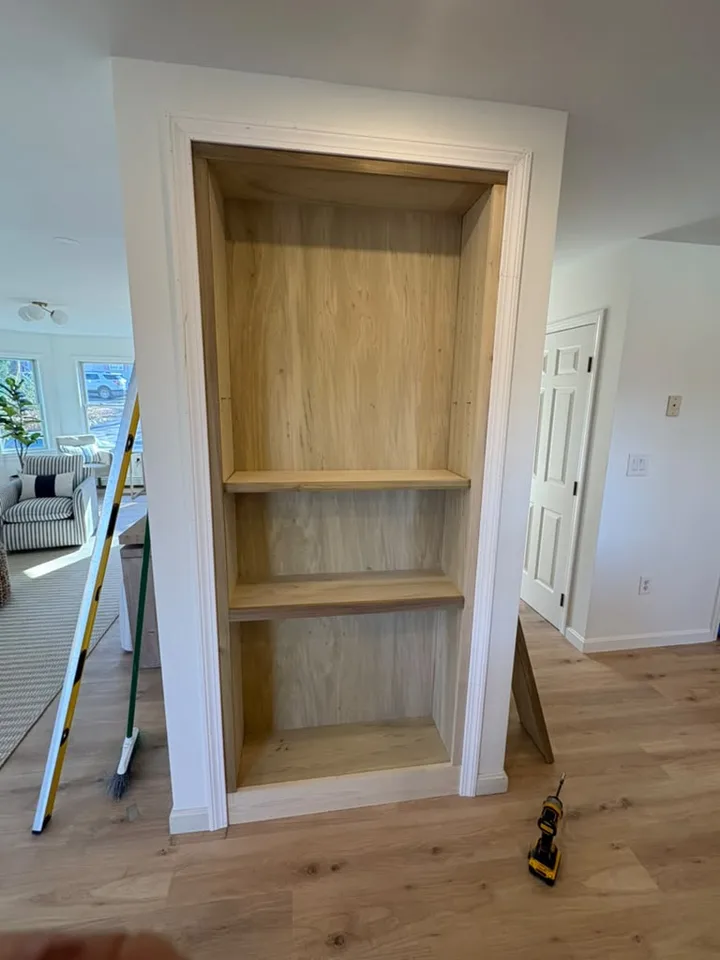
What finish carpentry covers
How a job goes
- Visit and measure We come out, look at the walls and the floor (old houses are rarely square), take measurements and photos, and talk through what you want.
- Price in writing You get a written price with materials, scope and timing. In Massachusetts, home improvement work over $1,000 needs a written contract, and that is how we do it anyway.
- Build and fit Boxes and parts are cut and assembled, then set in place and scribed to the wall so there is no gap to caulk away.
- Trim, fill, sand Casing, crown and base go on, nail holes are filled and joints sanded so the paint goes on clean.
- Walk-through We go over the work with you before we call it done.
Materials, in plain words
Most trim and built-ins in Dedham and Needham houses get painted, so most of what we install is paint-grade. When you want the wood to show, we switch to stain-grade lumber and plywood that match.
| Material | Good for | Watch out for |
|---|---|---|
| Poplar | Paint-grade casing, baseboard, shaker doors and face frames. Hard, takes paint well. | Greenish streaks, so not for stain. |
| MDF | Paint-grade baseboard, crown and panels. Smooth, stable, cost-friendly. | Swells with water: keep it off wet floors in mudrooms and baths. |
| Birch or maple plywood | Built-in boxes, shelves and cabinet sides. | Exposed edges need edge banding or a face frame. |
| Oak, maple, cherry | Stain-grade trim and built-ins that show the wood. | More cost, and every board has to match in color and grain. |
| PVC or cedar | Exterior trim around windows and doors. | PVC moves with heat: it needs the right gaps and fasteners. |
What moves the price
- Material. Stain-grade hardwood costs more than paint-grade poplar or MDF, in lumber and in time.
- The walls. Plaster walls out of plumb and floors out of level take more scribing and shimming.
- Corners and openings. A room with eight corners and three doors takes longer than a simple box.
- Profiles. Matching an old casing or crown profile can mean stacking two or three moldings.
- Paint. Whether we leave it primed and caulked, or fully painted.
We price after we see the room, and the estimate is free.
Finish carpentry questions
What does a finish carpenter do?
A finish carpenter does the visible woodwork that goes in after the walls are up: cabinets, built-ins, baseboard, crown molding, door and window casing, wainscoting and shelving. Rough carpentry is the framing behind the walls; finish carpentry is what you see and touch.
Finish carpenter or cabinet maker?
A cabinet maker builds boxes and doors in a shop. A finish carpenter installs them and builds what has to fit the room on site: we build built-ins in place, scribe them to out-of-square walls and trim them out, and we install cabinets you bought from a kitchen company.
How do you price finish carpentry?
By the job, after we measure. A free estimate covers the materials, the number of rooms and corners, and whether paint is included, so the number you get is for your rooms and not a national average.
Paint-grade or stain-grade trim?
Paint-grade trim (poplar or MDF) costs less and hides joints under paint. Stain-grade (oak, maple, cherry) shows the wood, so every board has to match and every joint has to be perfect, and it costs more in material and labor.
Do I need to empty the room?
Clear the walls we are working on and about three feet in front of them. We cover floors, cut outside or in one spot, and clean up every day.
Free estimate. We come and measure.
Tell us the town and what you want built or fixed. A photo or two of the room helps us show up with the right idea.
Calls and texts in English or Portuguese.